
 View Profile
 View Forum Posts
 View Forum Threads
 Show All Albums
 Private Message
 View Articles
 View Blog Entries

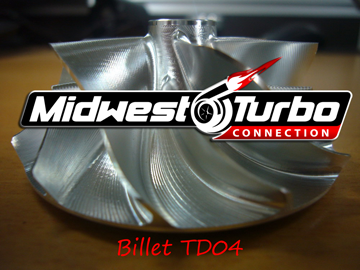
One thing to remember is on the Evo VIII, it uses a 9cm2 aka 65 AR roughly turbine housing and the Evo III is a 7cm2 .49 AR roughly. The larger the AR the slower exhaust gas travels through the turbine and the slower boost response you will have at lower rpms. One thing that obviously affects spool and exhaust gas velocity is the turbine wheel which is something we took into account when we made our new turbine shafts. Another thing which will help eliminate any potential bottle necking with the Evo III turbine housing is we will be porting all of the exhaust housings so that should eliminate most of the difference between the higher AR Evo VIII turbine housing. Given that the compressor side will be the same (the stage 2 & 3 we do have to weld a sleeve in like our TD04 19Ts) the only difference is the turbine housing and even that is not a huge difference after we finish porting them and after getting our new turbine wheels.
Its all about the engines VE (volumetric efficiency). At any given RPM an engines CFM flow is based off of several factors. From our estimations and from what we've seen with the Evo's with a 1.5L and the 7cm2 housing ported bigger with a different trim turbine wheel, we should be right on for maximizing the engines VE with the turbos. Things to keep in mind also are that we aren't using a 20 year old compressor wheel or turbine wheel design. Everything is new and has been tested, changed and tested again to maximize efficiency.
Familymans TD05 stage 1 Billet turbos should be done within the next 1 1/2 weeks so hopefully he'll be able to get them on the dyno shortly after that so we can get some results up!.


 Reply With Quote
 .
.

 Originally Posted by mehrshadvr4


Bookmarks