Page 5 of 7 FirstFirst ... 34567 LastLast
Results 41 to 50 of 63

Thread: Billowing Hot Air: A Brief Analysis of Fluid Dynamics in Exhaust Systems

  1. #41
    Relax, it's just rocket science!
    Join Date
    Sep 2010
    Owner Since
    Nov 2001

    Location
    Ozark, AL
    Posts
    1,211
    Blog Entries
    2
    Thanks
    53
    Thanked 122 Times in 76 Posts
    Quote Originally Posted by AdamVR4 View Post


    Tyla,
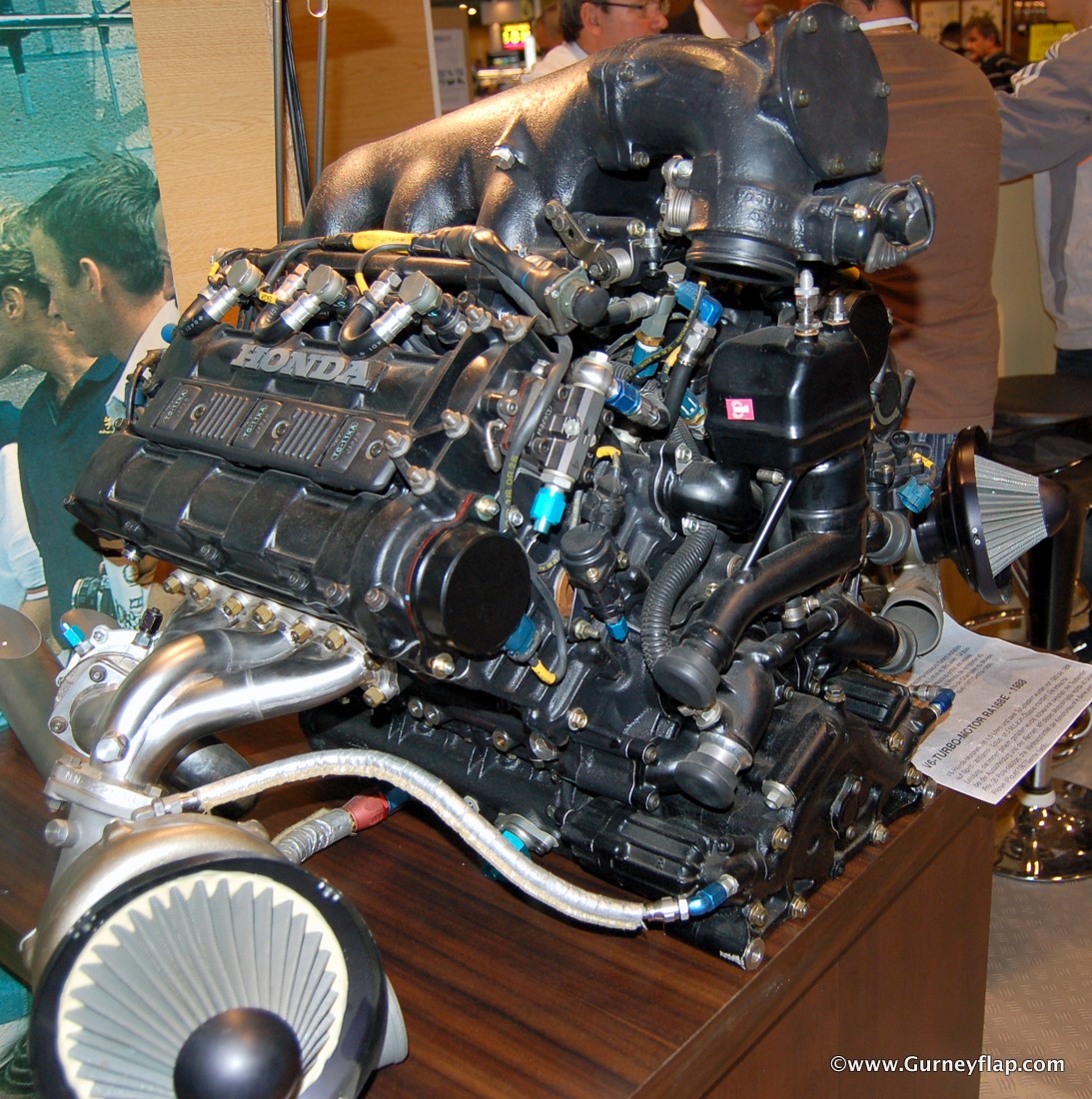
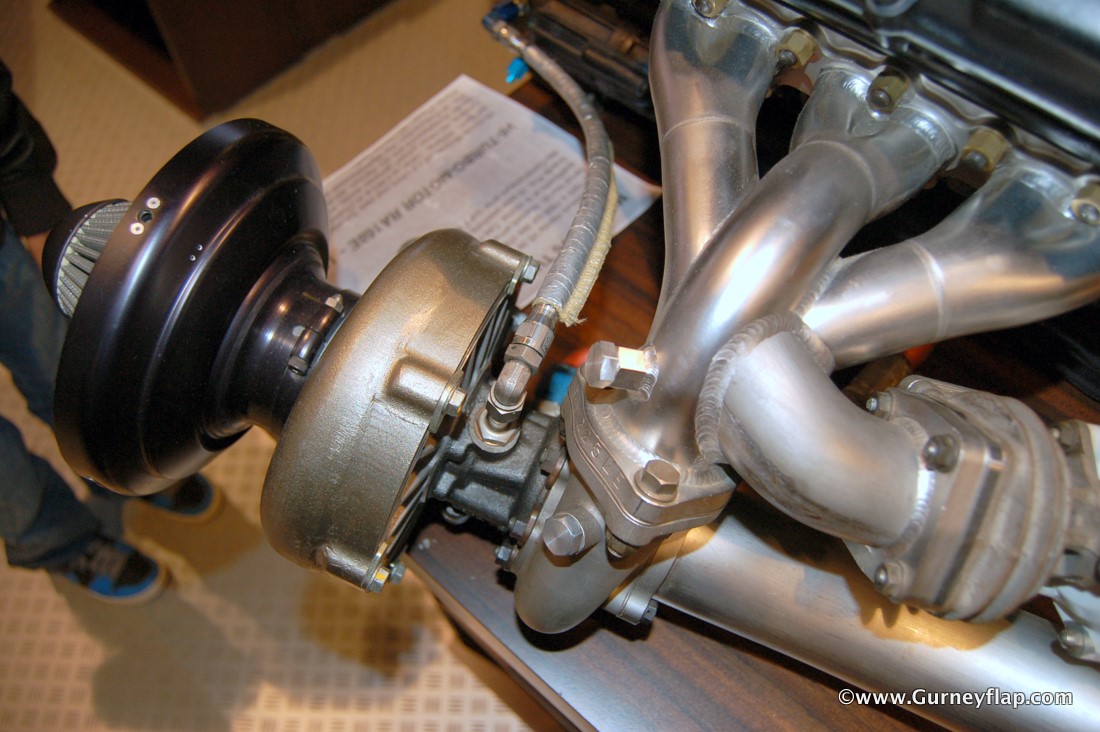
    Any guess why the intake tube is shaped the way it is?
    It's a peculiar design to say the least. Since it's attached to a turbocharger, we have to assume it has some properties useful in compressible flow. Let's talk this through to make an educated guess.

    1) The intake tube expands smoothly, causing a velocity decrease and a pressure increase.
    2) After the expansion, the tube contracts abruptly (but smoothly) to a pipe diameter smaller than the tubing that exists before the expansion. This causes a net velocity increase and pressure decrease.
    3) #2 could have been achieved without #1.

    So why the expansion there? I'm guessing it could be one or both of the following:

    1) Aeroacoustic suppression.
    2) Attempts to steady the flow to discourage separation and stall at low flow velocities, hence reducing the likelihood of compressor surge.

    Methinks we need another article on fluid dynamics in intake design! It's a much more obscure topic to say the least.

  2. #42
    OG Member verified
    Join Date
    Sep 2011
    Owner Since
    2003

    Location
    Elkhart, TX
    Posts
    277
    Blog Entries
    1
    Thanks
    66
    Thanked 11 Times in 11 Posts
    Quote Originally Posted by MR2 View Post
    is there a link to more pictures of that setup? that's a lot of pipe, I can only image that there would be a fair amount of heat dumped into the engine bay even with all the wrapping and coating?

    something short and sweet like this is what I'm keen for Agency Power 650 Turbo Kit Porsche 996TT | Porsche Tuning Mag

    or

    997 GT3/GT3RS Exhaust Products - Rennlist Discussion Forums

    Yumm
    No, they were all lost when the shop closed and the website went down. There may be a few individuals that archived them off 3si when I was making the build threads. Regarding the heat: The Turbine housings were coated eventually as well as heat sheilds were fabricated. The manifolds were coated inside and out and wrapped. Once all that was done, the heat went down significantly in the engine bay, but prior to all that work, the car liked to melt shifter cables due to the manifold design and wanting to make the turbo manifolds equal length.

  3. #43
    Forum User
    Join Date
    Sep 2010
    Owner Since
    2002

    Posts
    1,668
    Thanks
    514
    Thanked 388 Times in 259 Posts
    Quote Originally Posted by BigTyla View Post
    1) Aeroacoustic suppression.
    2) Attempts to steady the flow to discourage separation and stall at low flow velocities, hence reducing the likelihood of compressor surge.

    Methinks we need another article on fluid dynamics in intake design! It's a much more obscure topic to say the least.
    1) Ha! I'd never heard of "aeroacoustics" before. Awesome.
    2) That's a brain-full of a sentence, ha. Why would the flow become unsteady? Would it be fair to describe the expansion as a reservoir? Why would the expansion only be functional at low flow velocities?

    Would absolutely LOVE to get your thoughts on turbocharged intake design so I could implement what I learn this year
    '93 VR4 | 10.57 @ 135 on C16 | 11.29 @ 125 on 93 | ~3275 lbs

  4. #44
    Relax, it's just rocket science!
    Join Date
    Sep 2010
    Owner Since
    Nov 2001

    Location
    Ozark, AL
    Posts
    1,211
    Blog Entries
    2
    Thanks
    53
    Thanked 122 Times in 76 Posts
    Quote Originally Posted by AdamVR4 View Post
    1) Ha! I'd never heard of "aeroacoustics" before. Awesome.
    2) That's a brain-full of a sentence, ha. Why would the flow become unsteady? Would it be fair to describe the expansion as a reservoir? Why would the expansion only be functional at low flow velocities?

    Would absolutely LOVE to get your thoughts on turbocharged intake design so I could implement what I learn this year
    1) Oh yes, aeroacoustics is almost a discipline all by itself. If you're ever bored one day, read http://www.mech.kth.se/thesis/2010/l...ma_alenius.pdf.

    2) My thinking is that, at low enough flow velocities, the flow might not be fully turbulent. One of the advantages to turbulent flow is that it delays the onset of flow separation. This is why a golf ball has dimples! The dimples transition the flow to turbulent which carries more energy than the laminar case, and hence delays separation (see Aerodynamics in Sports Equipment, Recreation and Machines - Golf - Instructor). I'm thinking that expansion is some sort of chamber (or reservoir as you put it) that somehow encourages vorticity in the flow to maintain turbulent kinetic energy. Of course I could totally be wrong.

    As far as turbocharged intake design, I've just begun thinking about it. I've been debating how to design the intake system for my Talon, particularly post-compressor. I plan on sharing my thoughts about it soon to get some comments and criticisms, but my goal is to increase throttle response and decrease pressure loss.

  5. #45
    Member verified
    Join Date
    Sep 2010
    Owner Since
    Oct '08 - Oct '10

    Location
    Royersford, PA
    Posts
    3,814
    Blog Entries
    1
    Thanks
    1,059
    Thanked 442 Times in 317 Posts
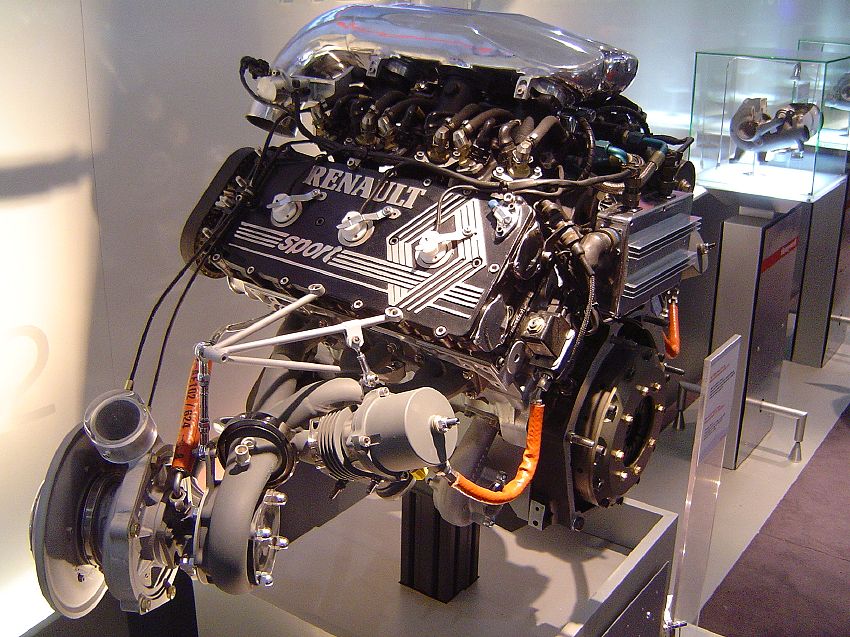
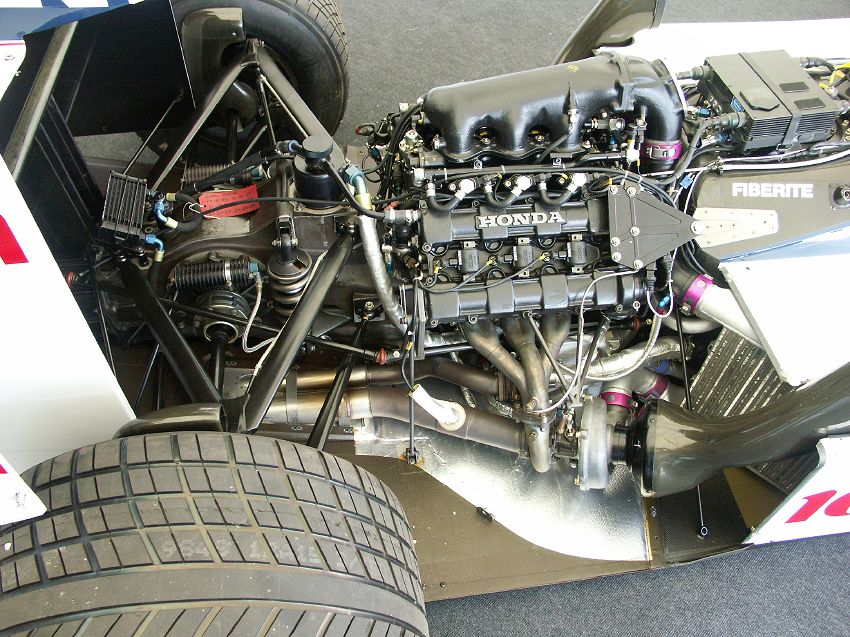
    I'm pretty sure that expansion chamber is to entice turbulent air flow like you mentioned. The Renault engine had the same expansion chamber, you can see the plate for it in this pic here:

  6. #46
    Forum User
    Join Date
    Sep 2010
    Owner Since
    2002

    Posts
    1,668
    Thanks
    514
    Thanked 388 Times in 259 Posts
    Quote Originally Posted by BigTyla View Post
    1) Oh yes, aeroacoustics is almost a discipline all by itself. If you're ever bored one day, read http://www.mech.kth.se/thesis/2010/l...ma_alenius.pdf.
    Wow, nice link. Saved it for future reading.

    Quote Originally Posted by BigTyla View Post
    2) My thinking is that, at low enough flow velocities, the flow might not be fully turbulent. One of the advantages to turbulent flow is that it delays the onset of flow separation. This is why a golf ball has dimples!
    Can't believe I'd forgotten that.


    Quote Originally Posted by BigTyla View Post
    I'm thinking that expansion is some sort of chamber (or reservoir as you put it) that somehow encourages vorticity in the flow to maintain turbulent kinetic energy. Of course I could totally be wrong.
    Okay, I think I get it now... Without that expansion, at low engine speeds, the flow would likely be fully developed and laminar. Because of the expansion in diameter, the flow becomes undeveloped, and as my book describes it "quite complex" ... If the flow slows and accelerates like that, it's bound to be turbulent, right?

    I'm always trying to apply this stuff back to Matt's findings on the dyno when he saw huge power gains when he added simple intake tubes to each turbo inlet... If the only goal is turbulent flow, shouldn't open turbos achieve that too? It's hilarious how little they even try to teach us about undeveloped flow

    Quote Originally Posted by BigTyla View Post
    As far as turbocharged intake design, I've just begun thinking about it. I've been debating how to design the intake system for my Talon, particularly post-compressor. I plan on sharing my thoughts about it soon to get some comments and criticisms, but my goal is to increase throttle response and decrease pressure loss.
    Looking forward to it.

  7. #47
    Forum User
    Join Date
    Sep 2010
    Owner Since
    2000

    Posts
    1,241
    Blog Entries
    2
    Thanks
    213
    Thanked 91 Times in 64 Posts
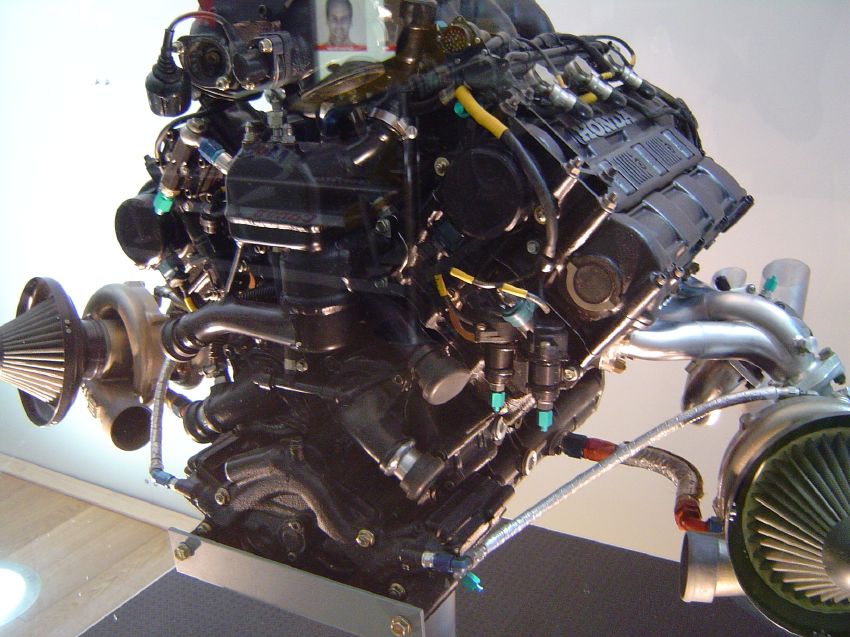
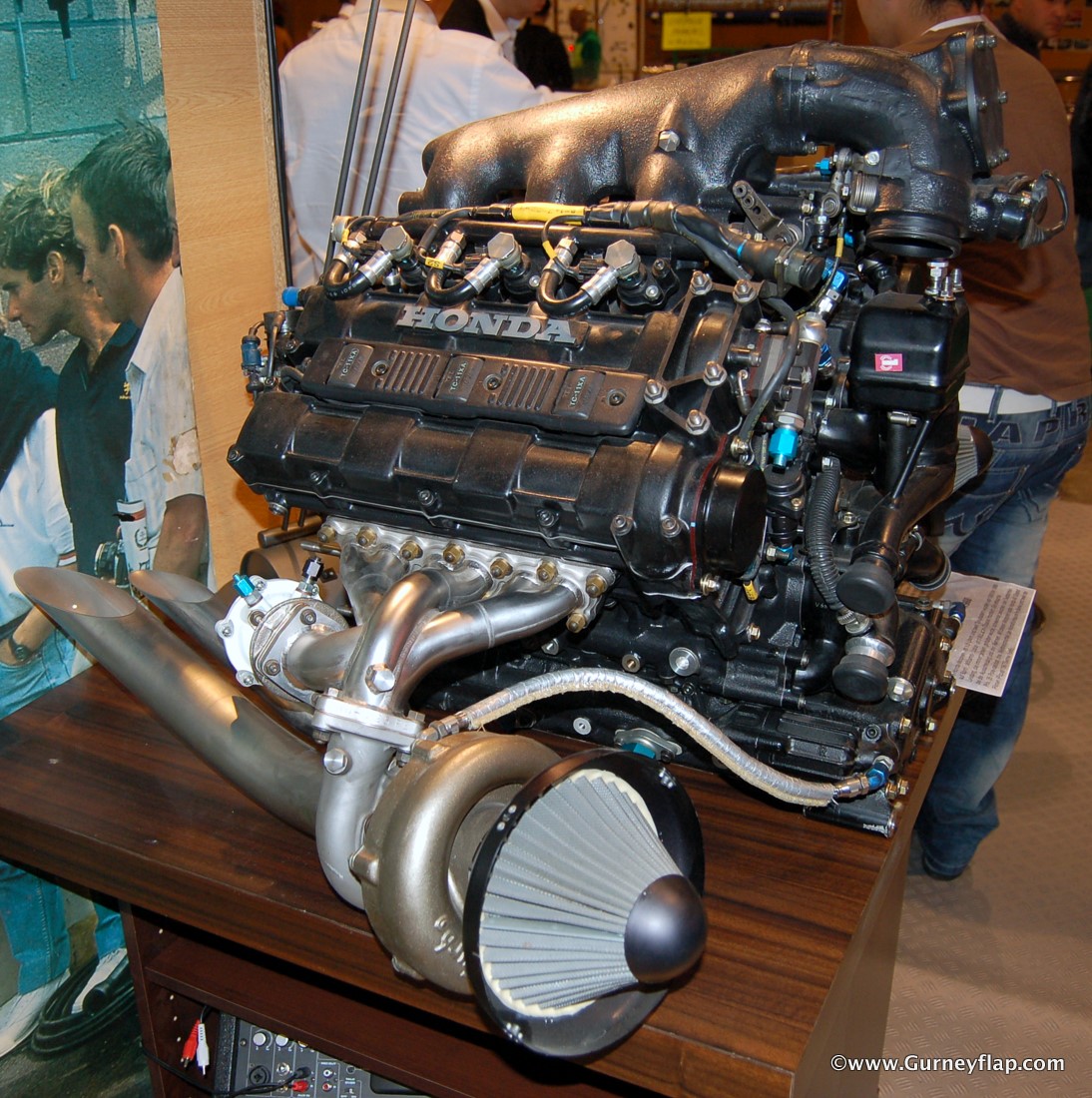
    some pics of the intake


    not sure if they mention the design in this video.its a good video to watch anyway..


    I don't know much about that honda engine but some manufacturers also had to shape the intake like that because of the inlet guide vanes.

    anyways i have a paper which introduces all the major spefications of this honda engine its a copyrighted paper so i don't want to share it publicly but pm me and ill share
    Last edited by mb7050; 12-21-2011 at 05:01 PM.

  8. #48
    One day....it will be on 4 wheels. supporter
    Join Date
    Sep 2010
    Owner Since
    2004

    Posts
    1,804
    Thanks
    153
    Thanked 37 Times in 30 Posts
    That is quite beautiful, thanks for sharing
    Building a House, Car Mods on hold!
    1996 GTO, Owner since 2003.

  9. #49
    Forum User
    Join Date
    Sep 2010
    Owner Since
    2002

    Posts
    1,668
    Thanks
    514
    Thanked 388 Times in 259 Posts
    So perhaps the expansion is simply there to allow for a larger filter and reduce pressure drop

  10. #50
    Relax, it's just rocket science!
    Join Date
    Sep 2010
    Owner Since
    Nov 2001

    Location
    Ozark, AL
    Posts
    1,211
    Blog Entries
    2
    Thanks
    53
    Thanked 122 Times in 76 Posts
    Quote Originally Posted by AdamVR4 View Post
    Okay, I think I get it now... Without that expansion, at low engine speeds, the flow would likely be fully developed and laminar. Because of the expansion in diameter, the flow becomes undeveloped, and as my book describes it "quite complex" ... If the flow slows and accelerates like that, it's bound to be turbulent, right?

    I'm always trying to apply this stuff back to Matt's findings on the dyno when he saw huge power gains when he added simple intake tubes to each turbo inlet... If the only goal is turbulent flow, shouldn't open turbos achieve that too? It's hilarious how little they even try to teach us about undeveloped flow
    Careful. There is fully developed laminar flow, transition to turbulence, and fully developed turbulent flow.

    I was just about to go into a long-winded conversation about turbulent flow as you seemed interested in the concept, but then I realized I dedicated an entire section of my thesis to describing turbulence at a brief level, so I'll let it do the talking.

    http://etd.auburn.edu/etd/bitstream/...pdf?sequence=2

    Section 1.3, pages 4-7.

    I realize that pretty pictures are most helpful to visualize things, so if you're interested in seeing turbulence in action, check out pages 67-71. There are more pictures without commentary in Appendix D.

    As far as the open turbos comment, do you mean no intake pipe attached to the compressor side? Could you link to Matt's thread? It makes sense that he would see high power gains by adding an intake pipe. The pipe helps to straighten the flow. That's not to say it's not turbulent or has no vorticity, just that the y-component of each molecule's velocity vector is decreased dramatically. Since energy must be conserved, the x-component must necessarily increase, leading to greater momentum about the x-axis, which is exactly what you want (flow perpendicular to the compressor blades). Without the intake pipe, you get air literally spilling over the compressor inlet, causing local pockets of separation before the compressor blades, leading to very high drag.

Bookmarks

Posting Permissions

  • You may not post new threads
  • You may not post replies
  • You may not post attachments
  • You may not edit your posts
  •  
The 3000GT/Stealth/GTO Web History Project
3000gt.com
3000GT / Stealth International WWWboard Archive
Jim's (RED3KGT) Reststop
3000GT/Stealth/GTO Information and Resources
Team 3S
3000GT / Stealth / GTO Information
daveblack.net
3000GT/Stealth/GTO Clubs and Groups
Michigan 3S
MInnesota 3S
Wisconsin 3S
Iowa, Nebraska, Kansas 3S
North California 3000GT/Stealth
United Society of 3S Owners
3000GT/Stealth/GTO Forums
3000GT/Stealth International
3000GT/Stealth/GTO Event Pages
3S National Gathering
East Coast Gathering
Upper Mid-West Gathering
Blue Ridge Gathering