 View Profile
 View Forum Posts
 View Forum Threads
 Show All Albums
 Private Message
 View Articles
 View Blog Entries

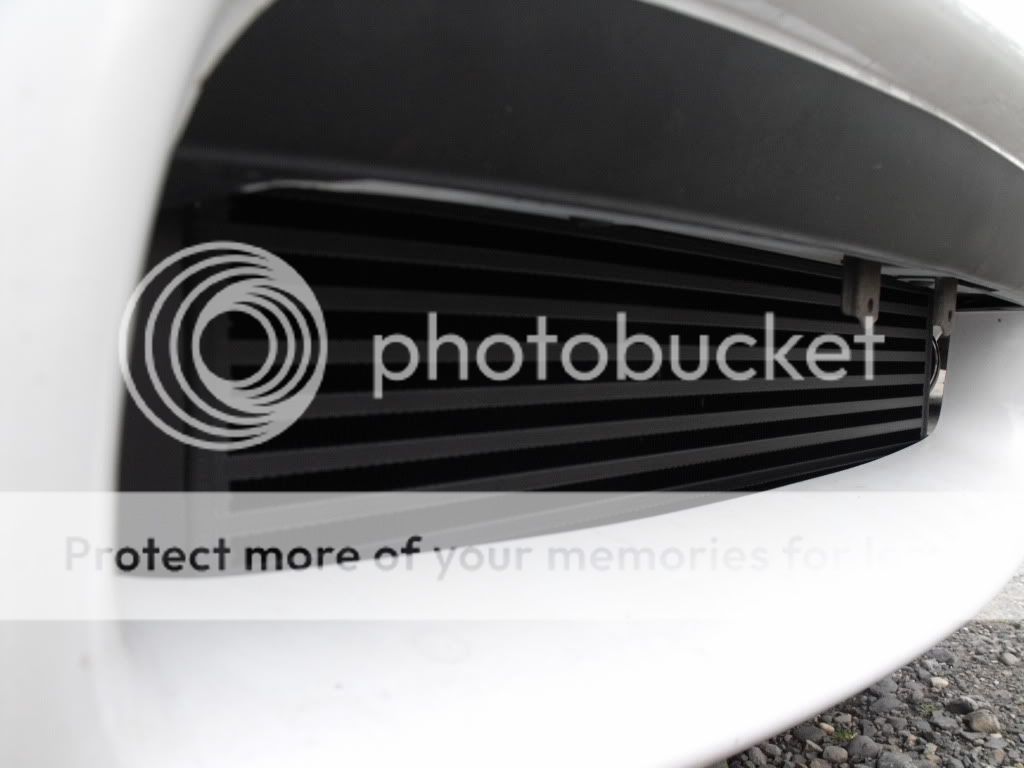
I talking o mike at ETS right now and he said that they are having a 15% of sale. Nice job forest gump on you buy!
http://www.extremeturbosystems.com/E...ooler-Kit.html


I talking o mike at ETS right now and he said that they are having a 15% of sale. Nice job forest gump on you buy!
http://www.extremeturbosystems.com/E...ooler-Kit.html
Last edited by vr4tune; 12-20-2011 at 03:47 PM.
Ported heads, IPS 2mm oversized valves, Delta 264/272 cams, 3SX High rev valve springs, 3SX cam gears,
Merkel 6g72 3.5L BILLET crank stroker (going in this summer), 3sx poly motor mounts
IPS EvoIII turbo kit, HKS SSQV bov, ETS anodized FMIC, AEM intake filters, Tanabe Turbo Back Concept G Blue Exhaust,
HKS DLI, Ultra spark plug wires, Denso iridium IK24 spark plugs,
JSPEC trans, Ultimate Performance short throw shifter, Spec carbon twin disk clutch, PST aluminum 2 piece drive shaft,
Denso Supra fuel pump, RC 750cc fuel injectors, AEM Fuel pressure regulator,
AEM wideband & boost gauge, AEM EMS in speed density,
Addco sway bars, DBA 4000 drilled & slotted rotors, Enkei PF01 18x9 +45, BFGoodrich g-froce KDW 245/40/R18

thanks, going to try to do the coating a hair different. Going to try to get the 2 lower intercooler pipes that are visible through the bumper powdercoated black and polish the upper pipes that are in the engine bay.
Parting 6 speed
Pampena 3.5 Stroker, GTX 2867 Gen IIs, AEM Series2, oohnoo SMIC, DN Hardpipes, FIC 1650s, Walbro 525, aermotive fpr, Dejon intake pipes, Tial Q, Koyo Rad, Samco Hoses, Stoptech 332mm fronts, HKS GT4 Coilovers, Spec 4+ LW, JDM 6 Speed, Billet shift forks, Pampena brace
That's what I did! I was the first to do it! The I talked coopkill in to it as well. So as far as I know you'll be the third to have that done.
It's STEALTH right!

sure is, I didn't get the core anodized though, want just a hair of bling
Well one could argue that it's notOriginally Posted by JasonY

-be sure to weight all the parts
101 water to air
Air-to-Water Intercooler
The water-based intercooler system becomes an attractive alternative to the air/air unit when space or plumbing restrictions preclude use of the latter. The logic behind most of the design criteria for the air/air IC applies as well to the water-based IC. Obviously, there are different considerations for handling the water. Although complex, the water-based IC enjoys the one terrific advantage of the far greater (fourteenfold) heat transfer coefficient between water and aluminum than between air and aluminum.
This huge difference is of huge value only if all the heat transfer barriers can be optimized such that the 14-to-1 rate can be of benefit. This is the path to the intercooler system that exceeds 100% for thermal efficiency. Presently this is not practical for any situation except a drag car, Bonneville runner, or marine application. The solution to the problem is in need of the services of a genius inventor type. Without any ingenious solutions, the water-based IC reverts to nothing more than an air/air unit in which the intake charge heat is carried to the front of the vehicle for exchange into the atmosphere by water rather than by the intake charge itself.
The focus of the problems on handling the water is largely centered around rate of water flow, amount of water in the system, and the subsequent removal of heat from the water
Charge-air heat exchanger.
It is easy to get a large internal flow area inside the water IC, since the most usable cores for this purpose are often air units with the flow reversed.
Although aluminum is by far the most convenient material to use in any IC application, copper core elements, should the situation allow them, can yield a greater heat transfer rate. The large flow areas usually associated with the water IC readily suggest that core thickness should be expanded as far as space permits.
Water will likely find equal access to all the core tubes, but attention should be given to trapped air in the top regions of the core. A simple air bleed can prevent air pockets. A better answer is to put the water in at the low point and take it out at the high point
Small air leaks in an air/air unit are unimportant, but any water leak in the main heat exchanger core can be a disaster. Thus it is imperative that the unit be pressure checked For leakage prior to use. Ten psi with the core underwater is adequate. Don't be surprised to see air bubbles coming right through cast aluminum .
Water pumps.
Easily the most usable pumps are 12-volt marine bilge pumps. These can be ganged in series or parallel, depending on pressure and flow capability of the pumps. The fundamental should not he overlooked that the more water circulated, the greater the IC efficiency. Consider a water flow rate of 10 gallons per minute a reasonable minimum. There is a trade-off in pump life versus IC efficiency if the pumps are required to run all the time. With performance the focus of all this work, the answer should he that the pumps run continuously. If the pumps run continuously, the interesting thing happens that when off boost, the intake air will be cooling the water in the IC.
Wiring the pumps to a switched 12-volt source will permit an audible inspection of their function every time the ignition is turned on. The pumps should be mounted as the low points of the IC system, so that they will always be primed and thus preclude the chance of their running dry.
Coolant.
Water is by far the best cooling medium. Glycol and other antifreeze materials degrade the ability of water to transport heat and should be used only in quantities required to prevent freezing and corrosion.
Essentially, put the same ratio of water and antifreeze into the IC that is used in the engine cooling system. Use of a modern coolant can offer the further benefit of protection from aluminum corrosion. Distilled or demineralized water will keep the system clean.
Reservoirs.
The size of the reservoir is of primes importance to the efficiency of the water-based IC. Consider that most applications of boost will last only a few seconds—say, 15 as a high average. Then it is reasonable to be sure in this interval that any given piece of water will not see the IC unit twice. A pump capability of 10 gallons per minute will move 2.5 gallons in 15 seconds: thus, the ideal size of the reservoir here is 2.5 gallons. Unreasonably large, obviously, but the point is made that the bigger the reservoir, the greater the time until the water takes its second lap through the IC It is not too difficult to see that as a larger reservoir is used, the need for a front cooler decreases. Consider that the greater the mass of water, the greater the thermal inertia.
Front cooler.
The front cooler is the least important part of the IC system, as it is doing most of its work when the vehicle is not operating under boost. At the start of a boost run, the entire system will be at approximately ambient temperature. As boost rises, heating the water in the main core, this heated water must get to the front core before it has any temperature difference with which to drive the heat out. This time delay can be as long as 7 or 8 seconds, depending on the size of the reservoir. That amount of time is typical of a boost application. It is clear, then, that the front cooler will do most of its work after the boost run. Since the temperature difference between the water and the front core is small compared to the temperature difference between the boost charge and the water, the time required to cool the water down is much greater than the time required to heat it up. This is another reason for running the water pumps ail the time. The front core does not need to be as big as it may seem at first glance, because the relative cfm rates through the two cores will usually be heavily biased toward the front cooler. For example, a forward velocity of just 60 mph could potentially put 5280 cfm through a cooler of 1 square foot area. Surely it is another case of bigger is better, but not really enough better to get carried away with huge front coolers.
Last edited by mb7050; 12-20-2011 at 05:00 PM.

Remember when I was keen for the Water to air? that was a long time ago
Building a House, Car Mods on hold!
1996 GTO, Owner since 2003.
oh, and VR4tune, IF I were to do a front mount, that would be EXACTLY what I'd be after.
nope, i don't remember that one.
Water-to-air is a great alternative if you are really against a front-mount or simply don't have enough room up front. It's great for drag racing! Just remember that you have more parts that can break in that system.
 Posting Permissions
|
3000gt.com 3000GT / Stealth International WWWboard Archive Jim's (RED3KGT) Reststop |
|
Team 3S 3000GT / Stealth / GTO Information daveblack.net |
|
Michigan 3S MInnesota 3S Wisconsin 3S Iowa, Nebraska, Kansas 3S |
North California 3000GT/Stealth United Society of 3S Owners 3000GT/Stealth/GTO Forums 3000GT/Stealth International |
|
3S National Gathering East Coast Gathering Upper Mid-West Gathering Blue Ridge Gathering |


 Reply With Quote




Bookmarks