Page 1 of 16 12311 ... LastLast
Results 1 to 10 of 153

Thread: Highest recorded top speed of 3/S? Has anyone ever broke 200mph...

Hybrid View

Previous Post Previous Post   Next Post Next Post
  1. #1
    Banned J. Fast's Avatar
    Join Date
    Sep 2010
    Owner Since
    - O - SIX -

    Location
    Colorado, USA
    Posts
    2,711
    Thanks
    405
    Thanked 200 Times in 140 Posts

    Highest recorded top speed of 3/S? Has anyone ever broke 200mph...

    ...gps or video supported. How much road do you think is required for a 3500lb 3/S to break 2 bills...

    ...with 500whp (or is that not enough to get there)?

    ...with 600whp (or is that not enough to get there either)?

    ...with 700whp?

    No hills, no headwind, SAE conditions... dont care about fuel. Has it been done? What do you guys think minimum hp required to get it done?

    BTW, the highest documented top speed I can find on record is Hennesy. He recorded a top speed of 177mph in 1991.

    I've read the top speed thread at 3si and yada yada... seriously though. Has anyone gotten close?

  2. #2
    Forum User
    Join Date
    Sep 2010
    Owner Since
    2002

    Location
    Delaware
    Posts
    990
    Thanks
    94
    Thanked 85 Times in 61 Posts
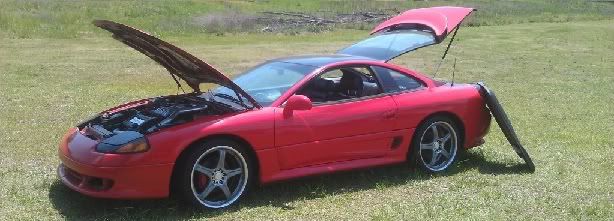
    Ive been close, got scared when seeing the stock hood an inch in air at the fender. I went near 190. Had the power for more. DR650s, DR2 heads, 22psi, trapped 125mph, so probably 450-475 wheel.

    Car was fairly stable, steering was feeling light. Rear wiper bouncing off hatch. Front wipers an inch or so off the windshield. Side glass 1/2 gap off the door seals.

    Jason

    Silverstone Metallic 94 R2 FD and a Silver 2015 F250 Lariat Ultimate CCSB 6.7PSD
    Sold: Black 99 VR4 and two Pearl White 93 VR4's. Just say NO to FMIC's

  3. The Following User Says Thank You to JasonY For This Useful Post:


  4. #3
    Forum User Not Verified
    Join Date
    Sep 2010
    Owner Since
    2001

    Location
    Medford OR
    Posts
    1,420
    Thanks
    5
    Thanked 602 Times in 302 Posts
    Matt Monet from 2001

    i have pulled me 93 to 7300 in 5th(a little under 200mph), and my 95 to 6700 in 6th (about 216mph)


    and my viper to 6100 in 5th (down hill) about 201-202mph


    Real Performance Automotive (541)816-4500 www.FB.com/RealPerformanceAuto

  5. The Following User Says Thank You to RealMcCoy For This Useful Post:


  6. #4
    What it is? Not Verified
    Join Date
    Sep 2010
    Owner Since

    Posts
    71
    Thanks
    13
    Thanked 2 Times in 2 Posts
    I remember a member on the other forum had a gps confirmed speed of just over 200mph, that was awhile back though, I'd have to search for the post.
    92' Stealth R/T TT-DR-650s, Greddy FMIC, MAFT, SAFC2, Greddy profec B spec 2, HKS turbo timer, Dejon pre-turbo intake pipes, PST aluminum driveshaft, Maximal Tcase bracket, 25 spline trans, Fidanza Flywheel, Spec stg 3 clutch, 3sx underdrive pulley, Solid motor mounts, 550cc injectors, Walbro 255, Fuel lab FPR, Fuel rail loop, braided fuel lines, plenum spacer, Borla catback, Megan DP (giggidy ), gutted precats, 19" SSR D5Rs, Drilled/slotted rotors, Tein S Techs, Aluminum STEALTH door sills and spark plug cover, Dual ARM-1's, Autometer gauges, Front mount oil cooler, 3sx dual pass radiator w/ flexlite fans, RFL BOV.

  7. #5
    Banned J. Fast's Avatar
    Join Date
    Sep 2010
    Owner Since
    - O - SIX -

    Location
    Colorado, USA
    Posts
    2,711
    Thanks
    405
    Thanked 200 Times in 140 Posts
    Here's some stuff I dug up from Norwood Autocraft Aerodynamics regarding the subject matter.

    Quote Originally Posted by Norwood
    The Aerodynamics of Drag and Power


    Aviation people distinguish air resistance as parasitic and induced drag, but the critical thing to understand is that drag increases as the square of speed. That is, while power increases in a linear fashion, drag increases exponentially with speed, in a parabolic function. For example (neglecting the effect of rolling resistance), if 100 horsepower would push a certain vehicle 100 miles per hour through the air, doubling the speed to 200 would require two-squared or 400 horsepower to overcome air resistance, while 300 miles per hour would require 900 horsepower.

    Components of the following formulae which can be used to compute power required to achieve a certain speed in a vehicle:


    Power = 8.702 x 10**(-6) x Cd x A x V**3


    where Cd = coefficient of drag (look it up for your vehicle)

    A = square feet of frontal area of the vehicle

    V = Velocity, in miles per hour


    The 8.702 x 10**(-6) section of the equation is a slightly-fudged correction factor made up by me to account for air density, gravity, rolling resistance, etc. Bell uses 6.7 x 10**(-6) x Cd x A x mph**3 and adjusts for actual rolling resistance, where


    Rolling Power = 4.0 x 10**(-5) x weight x mph


    Cd is adjusted to include rolling resistance (a relatively flat function), and air density is assumed to be standard Temp. and pressure at sea level. Intuitively, power required to achieve a certain speed is dependent on how good a shape the vehicle has (coefficient of drag), how big the shape is (frontal area), and how dense the air is.

    Working through an example, Bill Gordon’s Norwood Autocraft 8.2L 288-GTO 308 conversion, assuming a Cd of .33, a frontal area of 20.5 square feet, and assuming a target speed is 200 mph. Therefore,


    Required Power = (8.702 x 10**(-6) x.33 x 20.5 x 200**3

    Required Power = 0.000008702 x .33 x 20.5 x 8,000,000

    Required Power = 472


    Observed results when Norwood was running the car with a super-high-output naturally-aspirated 302-inch Chevrolet small-block engine were that the estimated 550-600 plus crankshaft horsepower took the car to 199 mph. Norwood says experience indicates it takes almost 600 crankshaft horsepower to break 200mph, a rule of thumb born-out yet again when a Norwood Toyota MR2-turbo set a record in the 1.5-liter blown modified sports class after it attained 207 mph on 465 chassis dyno rear-wheel horsepower, an estimated 585 at the crank.


    Another formula computes power required to increase to a new higher speed:


    New Required Power = Old Power (New Speed/Old Speed)**3, where Old Power is total available rear-wheel power.


    For the 288-GTO to attain 300 miles per hour,


    New Power = 472 x (300/200)**3

    New Power = 1593


    In another example, lets consider the same car with the frontal area reduced by decreasing the height by one inch (which can often effectively be achieved by lowering the car). In round numbers, assume frontal area is decreased by .5 square feet. This reduces power required to break 200 in the GTO to 460 at the wheels, meaning crankshaft horsepower required to break 300 is reduced by about 55.


    Lowering the entire car has a direct effect on the frontal area multiplier, and is why you see speed record cars virtually scraping the ground. Lowering the GTO even one inch reduces frontal area roughly .5 square feet, reducing the frontal area multiplier to 20 square feet, which reduces required horsepower to hit 200 to 460, or 12 rwhp less. The point is, the effect of reducing drag pays far greater dividends on top speed than adding horsepower. It is standard practice to remove the side-view mirrors from “unmodified” cars before top speed runs.


    The above equations assume that a vehicle’s the torque and power curves are optimized for the application—that is, that the powerplant is mated to a gearbox that enables the vehicle to be at or very near its peak power at the target potential top speed. Naturally, the vehicle's cooling system must keep up with thermal loading at wide open throttle long enough to reach the target speed, the tires must maintain their integrity, and so on.

    Of course, most enthusiasts are more interested in road-racing-type performance than top speed, in which case the large down-forces needed to hold the car to the road on high-speed turns becomes essential and a necessary tradeoff against the added drag of the down-force wings. Good rear wings and frontal splitters and canards can add thousands of pounds of down-force at speeds over 100 mph, but they also add hugely to drag. You've heard it before, but there's no free lunch in aerodynamics either.
    From the records I could find from the Russian's conducting their wind tunnel tests the Cd of the 3K is 0.389? Can that be confirmed? And what is the OEM frontal area? Has anyone ever calc'd that?

    I think using Norwoods theoreticals as a baseline would be a good place to start. I liked their data. Looks like you need north of 500 to the wheel at first glance. I think once we dt the frontal we'll get a clearer picture. Anyone have some quick measurements for height and width? Outside front tire to tire and from ground to top of roof?
    Last edited by J. Fast; 01-20-2013 at 11:32 PM.

  8. The Following User Says Thank You to J. Fast For This Useful Post:


  9. #6
    Banned J. Fast's Avatar
    Join Date
    Sep 2010
    Owner Since
    - O - SIX -

    Location
    Colorado, USA
    Posts
    2,711
    Thanks
    405
    Thanked 200 Times in 140 Posts
    OK 3S Wiki... love it!

    A wind tunnel test in the Russian Magazine "AutoReview" has confirmed that the active aero is indeed functional. At speeds of 144km/h, a GTO with the active aero in the standard position has a lift force of (97Newtons front / 196Newtons rear), or (21.8lb/44.1 lb). That same car with the active aero elements engaged produced a lift force of (10.6lb/-10.6lb), for an equivalent zero-lift. At speeds of 200km/h, the change was more drastic with (50.8lb/102.5lb) disengaged versus (24.7lb/-24.7lb) engaged. This decrease in lift comes at a very small penalty, as the drag force at 144km/h only increased by 1.3lbs, from 140.7lbs to 142lbs. This was achieved by a decrease in the coefficient of drag (.390 to .389), with only a slight increase in frontal area (2.009m^2 to 2.029m^2).
    Using this data and the Norwood formula I summize:

    2.029M^2 converts to 21.84ft^2

    Setup looks like this...

    Required wheel horsepower to achieve 200mph = 8.072 x 10^-6 (x) Cd (x) Area(sf) (x) 200mph^3

    Required wheel horsepower to achieve 200mph = 0.000008702 (x) .39 (x) 21.84 (x) 8,000,000 = 593whp

    Answer = 593 uncorrected wheel horsepower.

    How many guys do we know have an actual 600+ uncorrected whp car?

  10. The Following User Says Thank You to J. Fast For This Useful Post:


  11. #7
    Forum User
    Join Date
    Sep 2010
    Owner Since
    oct.2007...

    Location
    Cleveland, Ohio, United States
    Posts
    366
    Thanks
    130
    Thanked 7 Times in 5 Posts
    Quote Originally Posted by J. Fast View Post
    OK 3S Wiki... love it!


    Using this data and the Norwood formula I summize:

    2.029M^2 converts to 21.84ft^2

    Setup looks like this...

    Required wheel horsepower to achieve 200mph = 8.072 x 10^-6 (x) Cd (x) Area(sf) (x) 200mph^3

    Required wheel horsepower to achieve 200mph = 0.000008702 (x) .39 (x) 21.84 (x) 8,000,000 = 593whp

    Answer = 593 uncorrected wheel horsepower.

    How many guys do we know have an actual 600+ uncorrected whp car?
    I was just thinking I know theres gotta be dr750 cars that "could" do 200 mph with the right setup (maybe lower ride height?)

  12. #8
    Banned J. Fast's Avatar
    Join Date
    Sep 2010
    Owner Since
    - O - SIX -

    Location
    Colorado, USA
    Posts
    2,711
    Thanks
    405
    Thanked 200 Times in 140 Posts
    To the guys saying they broke 180mph, hell even 200mph. Today, I pointed my car east and dropped the hammer 3 times for 8 flat and straight miles. 186mph... that was all she had and my SAEwhp is 720whp. So... I'm asking what's going on with the 180+mph guys and inquiring about those who claimed breaking 200mph.

  13. #9
    Forum User verified
    Join Date
    Sep 2011
    Owner Since
    2005

    Posts
    459
    Thanks
    18
    Thanked 12 Times in 11 Posts
    Quote Originally Posted by J. Fast View Post
    To the guys saying they broke 180mph, hell even 200mph. Today, I pointed my car east and dropped the hammer 3 times for 8 flat and straight miles. 186mph... that was all she had and my SAEwhp is 720whp. So... I'm asking what's going on with the 180+mph guys and inquiring about those who claimed breaking 200mph.
    your car must have tons of drag to get only that much with 3 times the stock whp. the stock first gen vr4 does over 160 with the spoiler down.i'm building my car for highway roll racing mostly so I've some ideas to how make the car as aerodynamic as possible. the first is to use stock shape hood and front bumper with blocked unnecessary hols(i can make a bracket for the licence plate to block one of the side holes, no rear spoiler and front spliter and rear diffuser (no fuel tank for the best possible diffuser angle and shape, will have fuel cell in the trunk for that). covering even under the engine and not just the front half of the car. using small NASA ducts on the hood for removing heat and feeding cool air. race mirrors for look and better aero. there is hidden curve on our cars because of the big ass mirrors on the door. i noticed it on Nelson's car and got the idea from him. the car looks much better with out the mirrors on the doors and the curve from finder to the door makes the car looks more wide body than before.


    if i can make it happen i'll cover the exhaust and ds under the car to have under the car as flat as possible. the rear engine cars are so easy to make the under flat. my friend's mr2 is also all flat till the rear where the engine is. i also noticed prius have something like a small mud flap in front of the tire to cut air around them. i saw the same thing on a new mazda 3 today too so this must have some effect on aerodynamic.


    GTR has a really similar hood as our 2ng gen hood and we might be able to use the vents from gtr on our hood. got to do some measuring, unless someone here do it before i do it. little to no drag and still having ventilation.


    all that plus making the car lighter.
    Last edited by mehrshadvr4; 01-22-2013 at 05:42 AM.

  14. #10
    Forum User
    Join Date
    Jun 2011
    Owner Since
    2010

    Location
    Sweden, Gothenburg
    Posts
    835
    Thanks
    32
    Thanked 49 Times in 38 Posts
    Quote Originally Posted by mehrshadvr4 View Post
    your car must have tons of drag to get only that much with 3 times the stock whp. the stock first gen vr4 does over 160 with the spoiler down.i'm building my car for highway roll racing mostly so I've some ideas to how make the car as aerodynamic as possible. the first is to use stock shape hood and front bumper with blocked unnecessary hols(i can make a bracket for the licence plate to block one of the side holes, no rear spoiler and front spliter and rear diffuser (no fuel tank for the best possible diffuser angle and shape, will have fuel cell in the trunk for that). covering even under the engine and not just the front half of the car. using small NASA ducts on the hood for removing heat and feeding cool air. race mirrors for look and better aero. there is hidden curve on our cars because of the big ass mirrors on the door. i noticed it on Nelson's car and got the idea from him. the car looks much better with out the mirrors on the doors and the curve from finder to the door makes the car looks more wide body than before.


    if i can make it happen i'll cover the exhaust and ds under the car to have under the car as flat as possible. the rear engine cars are so easy to make the under flat. my friend's mr2 is also all flat till the rear where the engine is. i also noticed prius have something like a small mud flap in front of the tire to cut air around them. i saw the same thing on a new mazda 3 today too so this must have some effect on aerodynamic.


    GTR has a really similar hood as our 2ng gen hood and we might be able to use the vents from gtr on our hood. got to do some measuring, unless someone here do it before i do it. little to no drag and still having ventilation.


    all that plus making the car lighter.
    The flaps in front of the wheels is to provide more grip. So that the wheel dont have to roll over a cushion of air. I think the air resistance would be the same as far as aerodynamics.

    Also those are intakes not vents on the gtr. If you where to put an intake on the hood i would place just one of those in the left lower corner to provide fresh air straight to the intake. Then a vent or two on the top position of the hood(hot air raises). Like the two vents on the 575 hood.

Bookmarks

Posting Permissions

  • You may not post new threads
  • You may not post replies
  • You may not post attachments
  • You may not edit your posts
  •  
The 3000GT/Stealth/GTO Web History Project
3000gt.com
3000GT / Stealth International WWWboard Archive
Jim's (RED3KGT) Reststop
3000GT/Stealth/GTO Information and Resources
Team 3S
3000GT / Stealth / GTO Information
daveblack.net
3000GT/Stealth/GTO Clubs and Groups
Michigan 3S
MInnesota 3S
Wisconsin 3S
Iowa, Nebraska, Kansas 3S
North California 3000GT/Stealth
United Society of 3S Owners
3000GT/Stealth/GTO Forums
3000GT/Stealth International
3000GT/Stealth/GTO Event Pages
3S National Gathering
East Coast Gathering
Upper Mid-West Gathering
Blue Ridge Gathering