Page 2 of 4 FirstFirst 1234 LastLast
Results 11 to 20 of 40

Thread: Pre-Turbo Meth Injection

  1. #11
    Forum User
    Join Date
    Sep 2010
    Owner Since
    2000

    Posts
    1,241
    Blog Entries
    2
    Thanks
    213
    Thanked 91 Times in 64 Posts
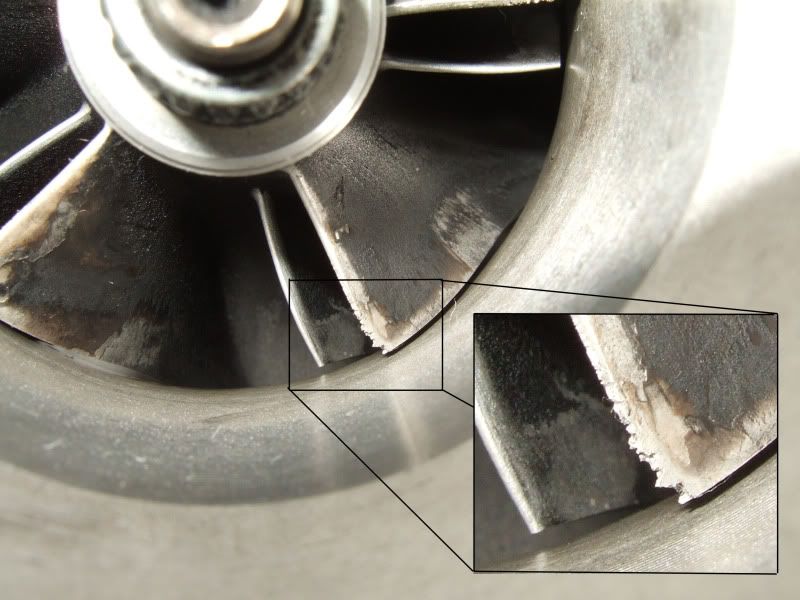
    i have done my research on the subject .I find is that almost everyone that has tried have had good results.Still I find that not very many people have tried this and I see why it is precision work and there are great risks involved. I have also found numerous people that have had impeller damage,mostly in these cases they were using large amounts of water and usually had the nossles in a poor location like below.


    conclusion :
    99% of set up's have zero problems. Your is a combination of bad location, bad shape of intake, non-metal (those rough plastic surfaces grip water droplets) No space for the fluid to properly mix with the airflow (it just settled out of the airstream)
    So basically the bad location was like running a stream of water into the blades.


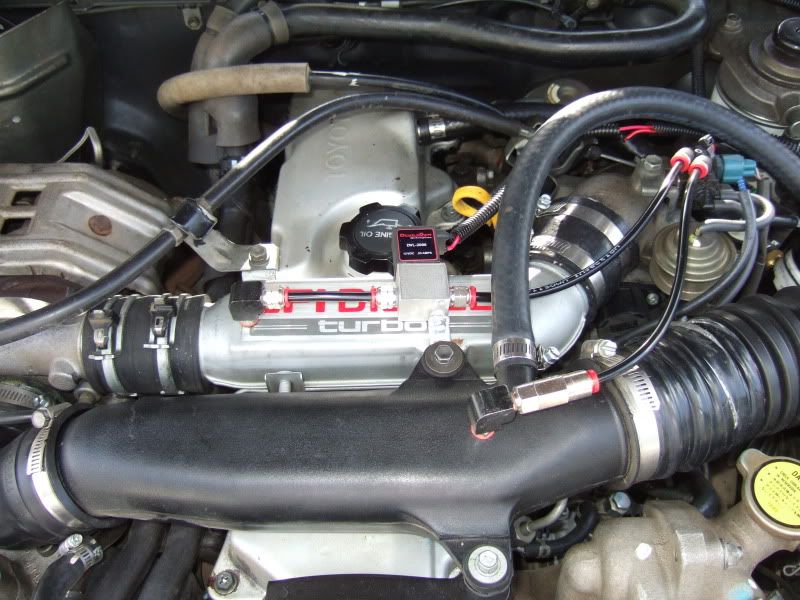
    The most correct way to do it is something like:


    I believe aquamist makes them .

    You can order them here too.
    Pre-Compressor Jet Holder - Howerton Engineering, LLC
    Bad thing is your limited to one injector per turbo.


    The other way to do it would be like this below.This way you could use multiple smaller nozzles to yield better atomisation


    And of course, you could weld a bung(s) on the preturbo pipe.

    Just make sure the nozzle is long enough to extend far enough inside the nozzle adapter its vital to allow it to spray properly and place it not too far away from the turbo inlet !

    Last edited by mb7050; 01-27-2013 at 11:05 PM.

  2. #12
    1st ever COTM and COTY verified
    Join Date
    Aug 2010
    Owner Since
    Birth

    Location
    Tennessee
    Posts
    7,077
    Thanks
    649
    Thanked 451 Times in 347 Posts
    Interesting, I'd still be fearful of a setup that isn't proven. In other words I wouldn't want to go through 2 sets of turbos getting it right. Seems like the risk is to high for the pay off.

    Edit: the thing above looks pretty cool

    Quote Originally Posted by HilbillyHomeboy View Post
    I bet she smells of old mustard and sawdust.
    Jeremy

  3. #13
    Forum User
    Join Date
    Sep 2010
    Owner Since
    2000

    Posts
    1,241
    Blog Entries
    2
    Thanks
    213
    Thanked 91 Times in 64 Posts
    Quote Originally Posted by green-lantern View Post
    I wouldn't want to go through 2 sets of turbos getting it right.
    better start with the DR750īs

  4. #14
    1st ever COTM and COTY verified
    Join Date
    Aug 2010
    Owner Since
    Birth

    Location
    Tennessee
    Posts
    7,077
    Thanks
    649
    Thanked 451 Times in 347 Posts
    of course

  5. #15
    DR750's cool kid club!
    Join Date
    Sep 2010
    Owner Since
    2006

    Location
    Ottawa
    Posts
    188
    Thanks
    24
    Thanked 55 Times in 31 Posts
    Wow interesting! It make sense (if it works) cooler air before being compressed would help making boost, like when it's cold out there. Make me wanna try a very small nozzle for each turbos. I was thinking (not sure) to try direct port injection like 6 x 175ml/min, that could be a good match with pre compressor injection.

    25$ each for those nozzle holder though!

    Eric


    DR750's, DR stage III heads, DR Boost cooler stage 2, Denso 660cc, TE37SL +273'S Z1 , KWv3, Stedebani suspension buschings, SCE 13'' Stoptech, 2G rear brakes, Forged shortblock, 3SX cam gears, SCE racing oil pan, PST CFDS, RPS 6 puck, RPS Flywheel, ETS FMIC, 3'' custom quad tips catback, new leather seats heated, SCE center diff, Quaife, brand new tranny/tcase, Billet casings, Chrome ECU, Swaintech...

  6. #16
    VR-3747 :D Not Verified
    Join Date
    Sep 2010
    Owner Since
    2008

    Location
    Dayton Ohio
    Posts
    1,792
    Blog Entries
    1
    Thanks
    19
    Thanked 123 Times in 86 Posts
    i can see where the benefit would be, but for a DIY person, i think its a terrible idea unless you just have lots of time, money, and knowledge on the subject. interesting that its so widely used though.

    on a dif note, i always thought meth injection was more desired to keep the pistons cool. you would not get that from pre turbo injection. making more boost is easy, keeping pistons cooler is not so easy
    rise and rise again until lambs become lions

  7. #17
    Forum User verified
    Join Date
    Sep 2010
    Owner Since

    Posts
    449
    Thanks
    48
    Thanked 26 Times in 17 Posts
    might be a dumb question, but doesnt the water meth injection go after the maf? wouldnt water or meth getting on the sensor mess with the airflow readings?
    the basic go fast bits...
    forged short block, Billet DR1000's, 680cc injectors, meth inj, FMIC, MAFT, Apexi Neo, hotwired 255lph fuel pump.

    Tuned by Ray Pampena

    Just a fun Daily Driver.

  8. #18
    The Panda Not Verified
    Join Date
    Sep 2010
    Owner Since
    01/11/06

    Location
    Washougal WA/Portland OR
    Posts
    686
    Thanks
    86
    Thanked 37 Times in 28 Posts
    Quote Originally Posted by thor'svr4 View Post
    might be a dumb question, but doesnt the water meth injection go after the maf? wouldnt water or meth getting on the sensor mess with the airflow readings?
    All the above mentioned setups are after the maf sensor. The main topic Is about locating the nozzle between the the maf sensor and the turbo (right before the turbo).

    Ported heads, IPS 2mm oversized valves, Delta 264/272 cams, 3SX High rev valve springs, 3SX cam gears,
    Merkel 6g72 3.5L BILLET crank stroker (going in this summer), 3sx poly motor mounts
    IPS EvoIII turbo kit, HKS SSQV bov, ETS anodized FMIC, AEM intake filters, Tanabe Turbo Back Concept G Blue Exhaust,
    HKS DLI, Ultra spark plug wires, Denso iridium IK24 spark plugs,
    JSPEC trans, Ultimate Performance short throw shifter, Spec carbon twin disk clutch, PST aluminum 2 piece drive shaft,
    Denso Supra fuel pump, RC 750cc fuel injectors, AEM Fuel pressure regulator,
    AEM wideband & boost gauge, AEM EMS in speed density,
    Addco sway bars, DBA 4000 drilled & slotted rotors, Enkei PF01 18x9 +45, BFGoodrich g-froce KDW 245/40/R18

  9. #19
    Now with more poop-smear Not Verified
    Join Date
    Sep 2010
    Owner Since
    Not Anymore

    Location
    Georgia
    Posts
    6,490
    Blog Entries
    3
    Thanks
    483
    Thanked 543 Times in 390 Posts
    i'm confused as to how this would help cool intake charge any more successfully than POST turbo injection.

  10. #20
    Forum User
    Join Date
    Sep 2010
    Owner Since
    2000

    Posts
    1,241
    Blog Entries
    2
    Thanks
    213
    Thanked 91 Times in 64 Posts
    It doesnt, Its a combination of both that yields the best results 'Staggered injection' (on most cases...if primary fuel is gasoline... )

    I guess I should add this info here.


    Pre-Turbocharger/Centrifugal Injection


    By placing the water methanol injection nozzle or nozzles pre-turbocharger or centrifugal supercharger and injecting a fine precise amount of water methanol into the air inlet of the compressor can have a dramatic positive effect on compressor efficiency (particularly with turbocharger systems and high boost centrifugal applications) while substantially lowering discharge temperatures at the source of compression. On 8-25 psi applications, users can expect to see a 70-160+ degree drop in compressor discharge temperatures. While reductions of 160-240+degree's can be had on 25-60+ psi high boost applications such as diesels.

    How is this possible?

    When water methanol is first injected, we're able to begin slightly cooling the incoming air entering the compressor. This air is already relatively cool in relation to the ambient temperature of the day as it has yet to be compressed and heated. Depending on the temperature of the day and how the air inlet is plumped and where the air is being drawn in from, the incoming air entering into the inlet of the compressor commonly ranges between 5-20 degree's above ambient. Only minor cooling of the air charge occurs at this stage before it enters into the compressor. More importantly, we are about to dramatically cool the air that is being compressed and heated within the turbocharger.

    It's important to understand it is here that the heat is being generated.

    A turbochargers impeller can spin at an astonishing speed between 100,000- 150,000 rpms. While centrifugal supercharger impellers spin between 40,000-65,000+ rpm. Between each pair of blades on an impeller exists a wedge shaped open space which the air fills in. As the impeller is spinning, this wedge shaped air pocket is subjected to tremendous centrifugal forces and is forced outward away from the center of the impeller to the outer edges. It is here where the air begins to stack up and compress against the compressor housing forming the heat as it makes it way into the scroll.

    As the compressed air heats up, it tries to further expand, making it now more difficult for the heated compressed air to pass through and exit the compressor thereby lowering the compressor efficiency. In addition, this compressed air is taking up more space within the compressor limiting new incoming air from being processed. Furthermore, the hot compressed air exiting the turbocharger is less dense as it has been heated significantly. Therefore, containing less power producing oxygen while making the engine considerably more prone to detonation.

    By cooling the air as it's being compressed within the turbocharger or centrifugal supercharger, the compressed air is now substantially cooler, more dense, taking less space and moves more efficiently through the compressor allowing us to pack and process more air through the turbocharger or centrifugal supercharger. This leads us to our second benefit. Improved compressor efficiency.

    All of this results in improved compressor efficiency. Because of this improved efficiency the compressor does not have to work as hard to produce the same amount of boost as without the water methanol injection. In turn it raises the maximum mass air flow of the compressor. Thereby, making a smaller turbocharger or centrifugal supercharger now perform like a larger turbocharger or centrifugal supercharger with the addition of the water methanol injection.

    Lastly, as already mentioned above, pre-compressor injection substantially lowers the discharge temperatures exiting the compressor. The engine is now less prone to detonation through this reduction in air charge temperatures. Furthermore, the use of an intercooler is dramatically reduced and in some applications no longer needed as it may not offer substantial further cooling effects in return for the pressure drop caused by it. Removal of the intercooler could now offer a further increase in boost pressure at the engine as well as compressor efficiency.

    While all of this sounds very exciting. To do this properly requires proper sizing of the nozzles in relation to the compressor size and output. Additionally, the type fluid being used also effects the size of the water injection nozzle selected. When done properly, very little of the water methanol mist injected into the inlet of the compressor survives the process. Thereby, discharging a much cooler air charge with a relativity high humidity with very little or no water methanol droplets present.

    When injecting water, we can quickly over saturate the air charge and have an excess of fluid discharging the compressor. Water has a much higher latent heat of vaporization, nearly double that of methanol, and does not flash (instantly evaporate) like that of methanol or other alcohols when injected into a hot air stream. Therefore, a smaller nozzle must be used when spraying pure water.

    A better choice for pre-compressor injection is a greater concentration of methanol vs. water or pure methanol. Methanol instantly flashes (evaporating) as soon as it enters into a hot compressor and meets the heat within it. By using an alcohol, this dramatically reduces the amount of actual fluid exiting the compressor due to it‘s fast evaporation. Additionally, methanol offers much greater cooling effect then water. Furthermore, methanol is also less dense then water thereby having a softer impact on the impeller. The specific gravity of pure methanol is .792 @ 68° F compared to water which is 1.00 @ 64° F.

    One major concern associated with pre-compressor injection is erosion of the impeller. This is only likely to occur when injecting solid stream of water at the impeller of a turbocharger or using an excessively large nozzle. Impeller erosion is highly unlikely with centrifugal supercharger as they spin at a considerably slower speed then turbochargers. Impeller erosion is of little concern with centrifugal superchargers.


    Pre Throttle Body Injection


    Positioning the water methanol injection nozzles or nozzles just before the throttle body or carburetor on turbocharged and centrifugal supercharger applications is by far the most common position and one of the most beneficial of all. Furthermore, most every application can easily be fitted in this manor. With injection taking place just before the throttle body/carburetor, inches before the intake of the engine, significant cylinder cooling and detonation suppression is achieved. Additionally, air charge temperatures are significantly reduced through the intake manifold.

    Care should always be taken concerning adequate distribution. In many cases intake manifolds can have individual intake ports beginning right after the throttle body. In applications such as this, the nozzle need only be pulled back away from the throttle body 4-5 inches to ensure proper distribution between all intake ports and not feeding one more then others.

    Many of our concerns are eliminated when injecting in this location such as injecting prior to the mass air meter, intercooler or being excessively to far away from the intake of the engine. With injection taking place right before the intake of the engine, the effects are maximized.

    As already mentioned, positioning the water methanol injection nozzles or nozzles just before the throttle body or carburetor on turbocharged and centrifugal supercharger applications is by far the most common position and one of the most beneficial of all as it offer excellent air charge cooling and exceptionable detonation control and cylinder cooling.

    Staggered Injection

    Staggered injection involves combining pre-compressor injection with an additional secondary nozzle positioned further down the turbocharger or centrifugal supercharger, such as pre-throttle body/carburetor injection. By combining pre-compressor injection with pre-throttle body injection, were able to improve the efficiency of the compressor while dramatically reducing air charge temperatures at the compressor and again at the intake for a combined synergistic effect. Furthermore, the secondary nozzle provides the necessary cylinder cooling, detonation control, and reduced EGT's which the pre-turbocharger nozzles does not.

    Best of all, installation remains essentially the same and costs are only marginally more as the addition of a secondary nozzle and tee fitting are all that is required. We highly recommend the staggered injection for all turbocharged applications and high boost centrifugal applications.

    For complete details on Pre-compressor injection and Pre-Throttle Body/Carburetor injection these are listed above individually.
    Last edited by mb7050; 01-27-2013 at 11:07 PM.

Bookmarks

Posting Permissions

  • You may not post new threads
  • You may not post replies
  • You may not post attachments
  • You may not edit your posts
  •  
The 3000GT/Stealth/GTO Web History Project
3000gt.com
3000GT / Stealth International WWWboard Archive
Jim's (RED3KGT) Reststop
3000GT/Stealth/GTO Information and Resources
Team 3S
3000GT / Stealth / GTO Information
daveblack.net
3000GT/Stealth/GTO Clubs and Groups
Michigan 3S
MInnesota 3S
Wisconsin 3S
Iowa, Nebraska, Kansas 3S
North California 3000GT/Stealth
United Society of 3S Owners
3000GT/Stealth/GTO Forums
3000GT/Stealth International
3000GT/Stealth/GTO Event Pages
3S National Gathering
East Coast Gathering
Upper Mid-West Gathering
Blue Ridge Gathering